
01
Define the cargo service precisely先明确装载条件
Give the complete cargo names, concentrations, operating temperatures and expected changes of service. Chemical resistance is specific to the coating and exposure conditions. A description such as ‘epoxy tank coating’ is not evidence that the product is suitable for every cargo, potable water or food contact.提供完整介质名称、浓度、使用温度和可能的装载变化。耐化学品性能与具体涂料及接触条件有关。仅凭“环氧舱室漆”的名称,不能认定产品适用于所有货物、饮用水或食品接触。
02
Compare the lining chemistry根据工况选择内涂层类型
UTOP’s cargo and oil tank offering includes Yutep 885 pure epoxy and Yutep 882 phenolic epoxy. The choice depends on the cargo and cleaning exposure, not a general ranking of one chemistry over another. Obtain a written cargo-resistance recommendation for the intended service before specifying the lining.鱼童货舱及油舱产品包括 Yutep 885 纯环氧与 Yutep 882 酚醛环氧。两者的选择取决于装载和清洗工况,并非一种树脂类型总是优于另一种。确定配套前,应取得对应使用条件的耐介质建议。
03
Treat curing and ventilation as part of the work把固化与通风作为施工的一部分
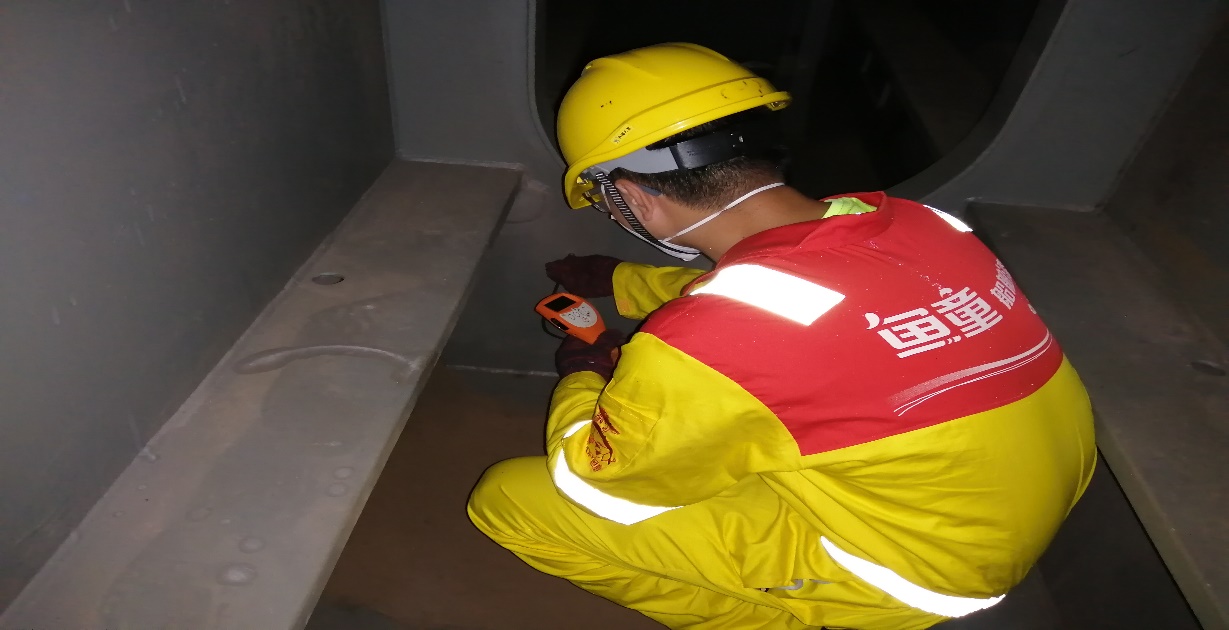
Internal geometry makes edges, welds, access and film continuity particularly important. Plan ventilation throughout application and curing, observe the specified intervals before loading, and agree inspection requirements in advance. Repair work must restore a continuous lining without leaving incompatible patch materials.舱内结构使边缘、焊缝、施工可达性与漆膜连续性尤为重要。涂装和固化期间都要安排通风,满足装载前的规定间隔,并提前明确检查要求。修补后应恢复连续内涂层,避免留下不相容的局部材料。